Help you understand gold plating and decide whether your watch needs it.

The Color
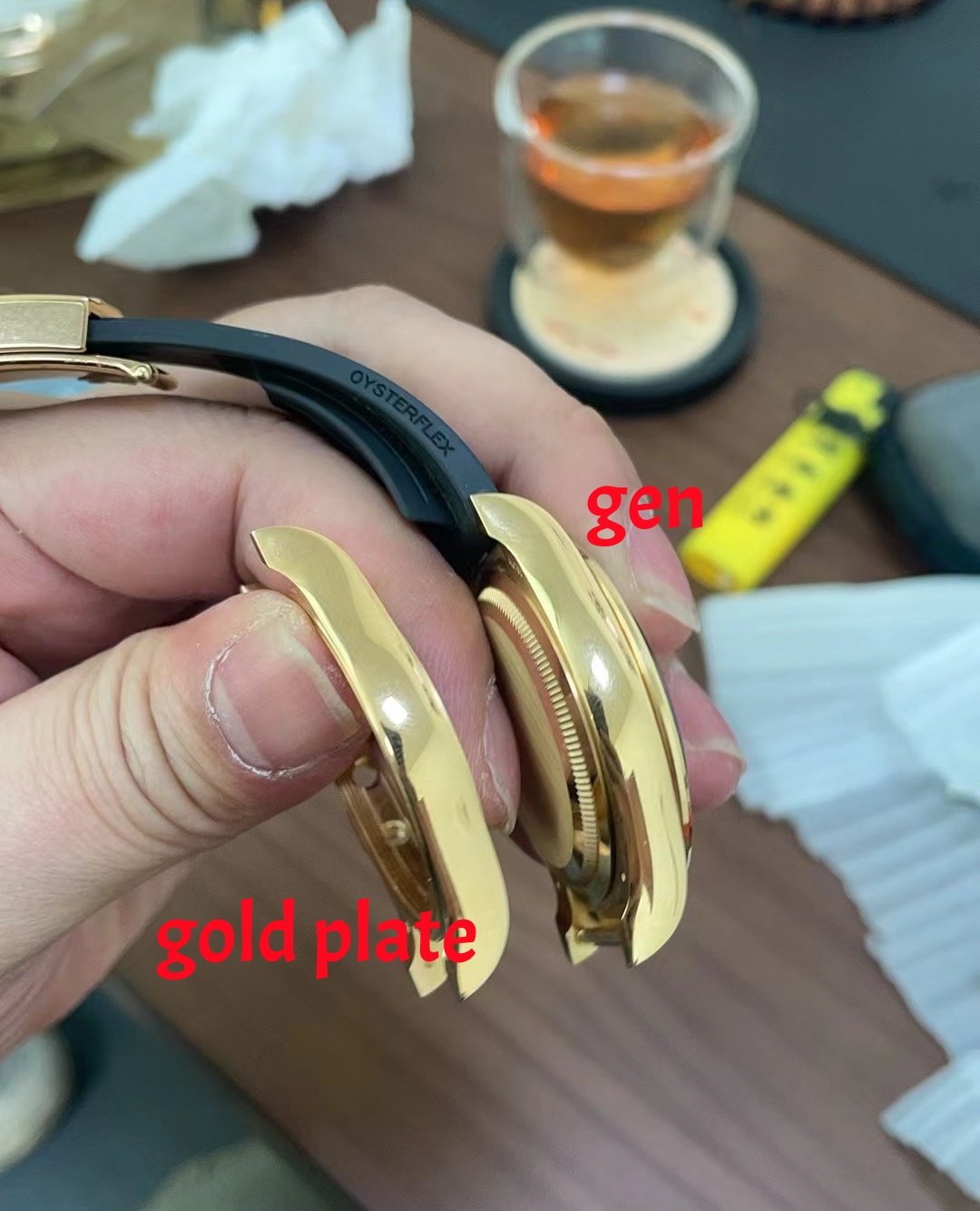
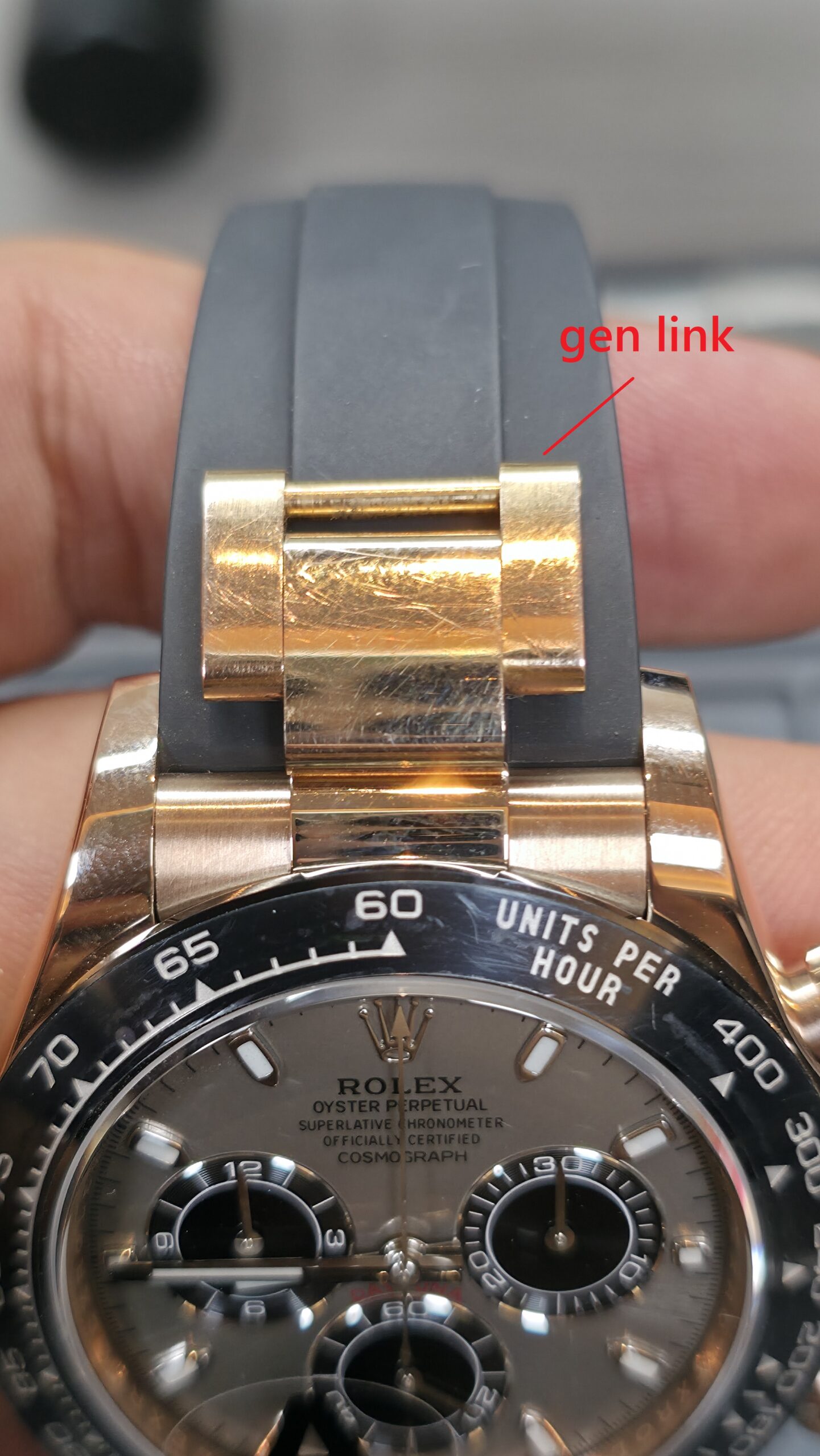
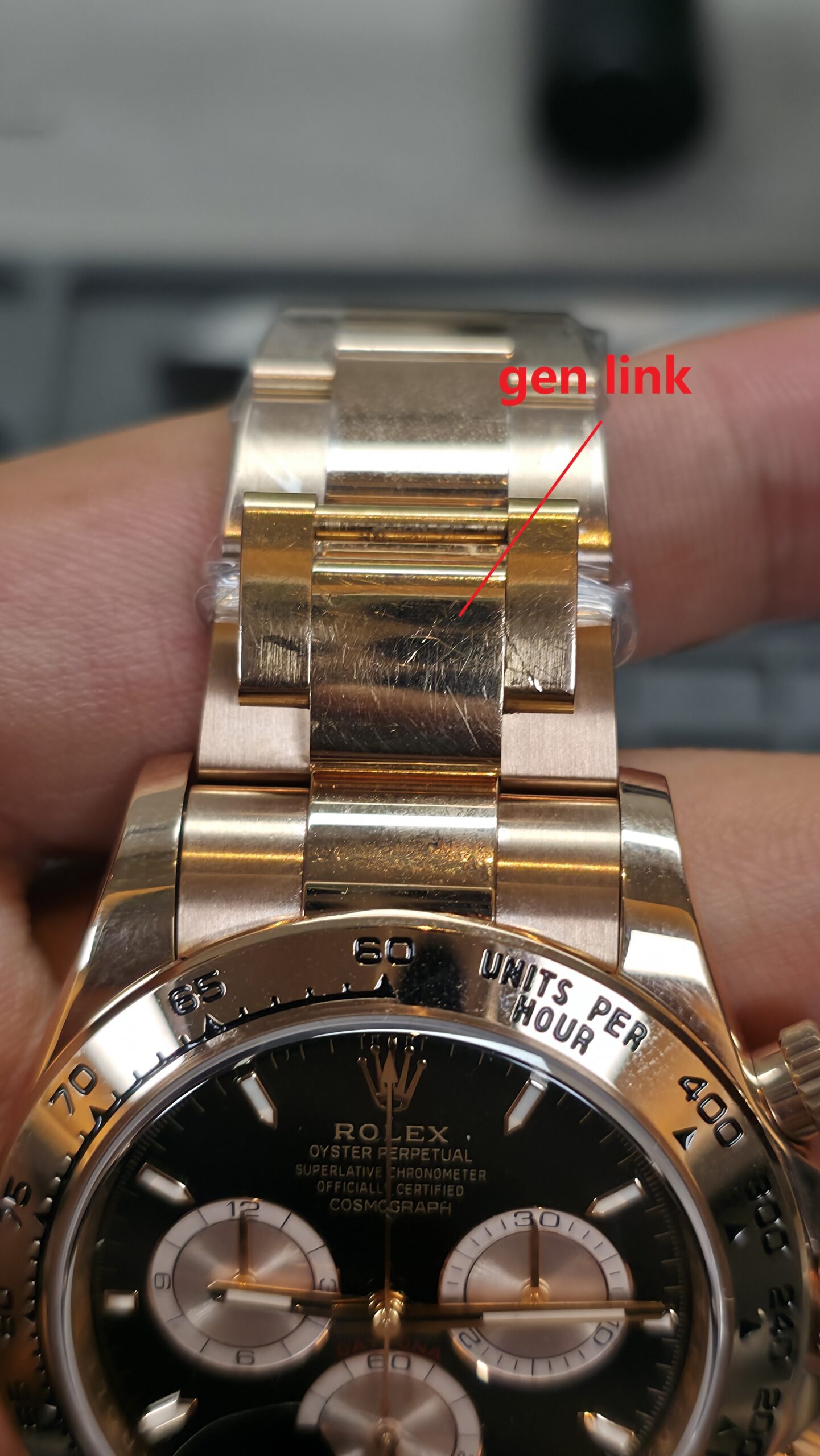
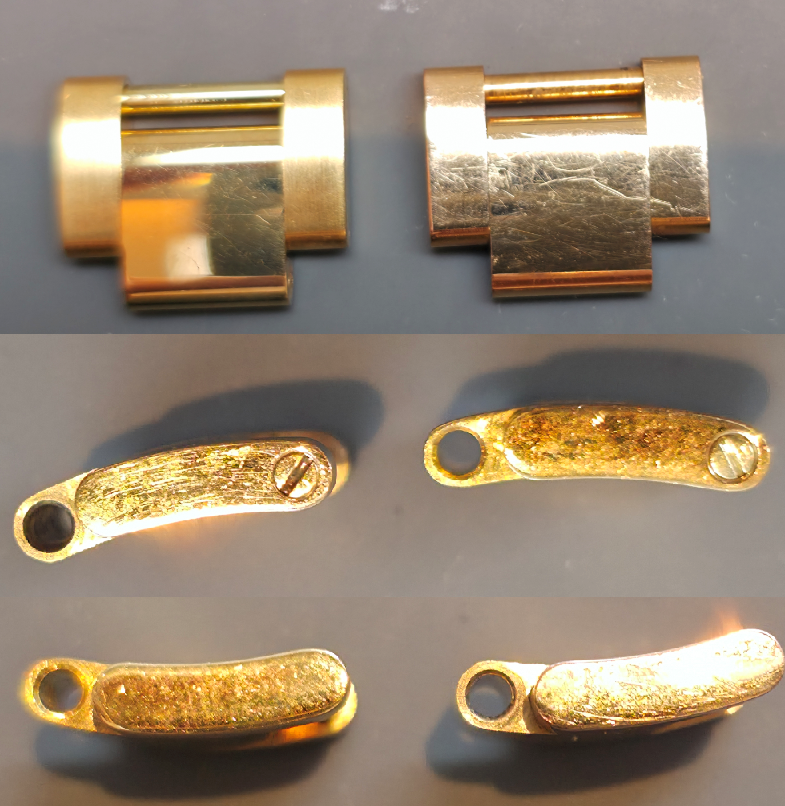
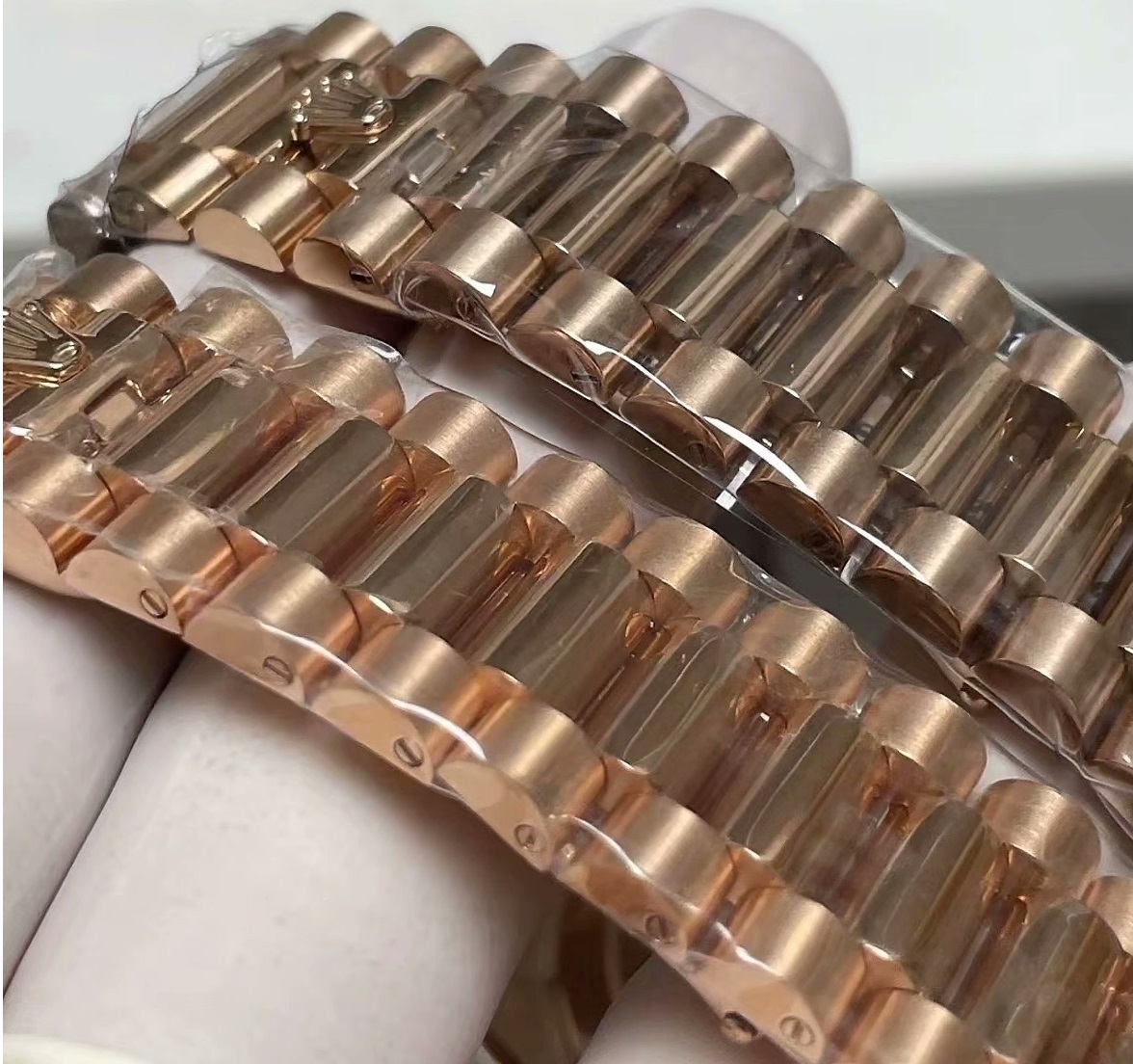
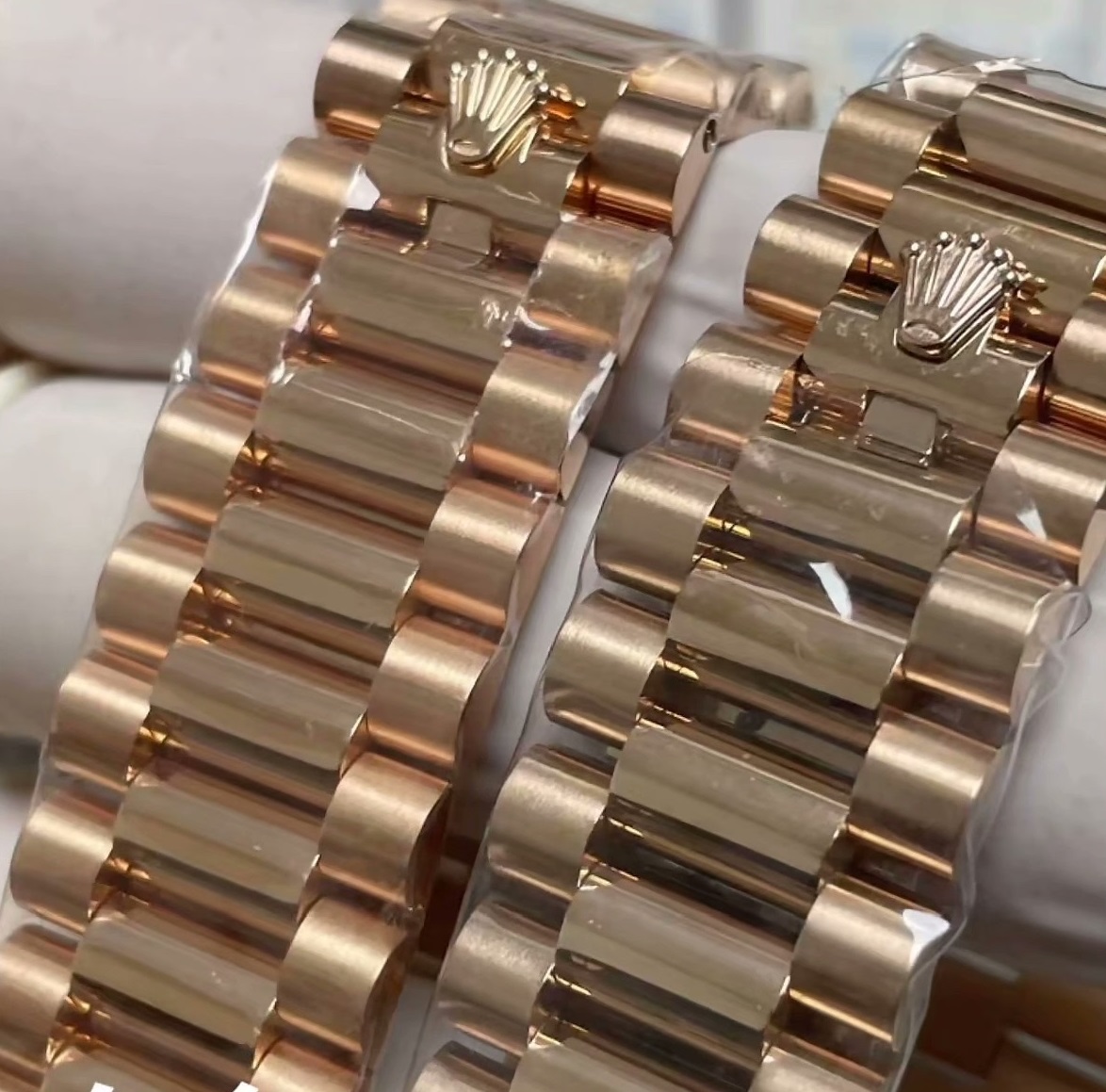
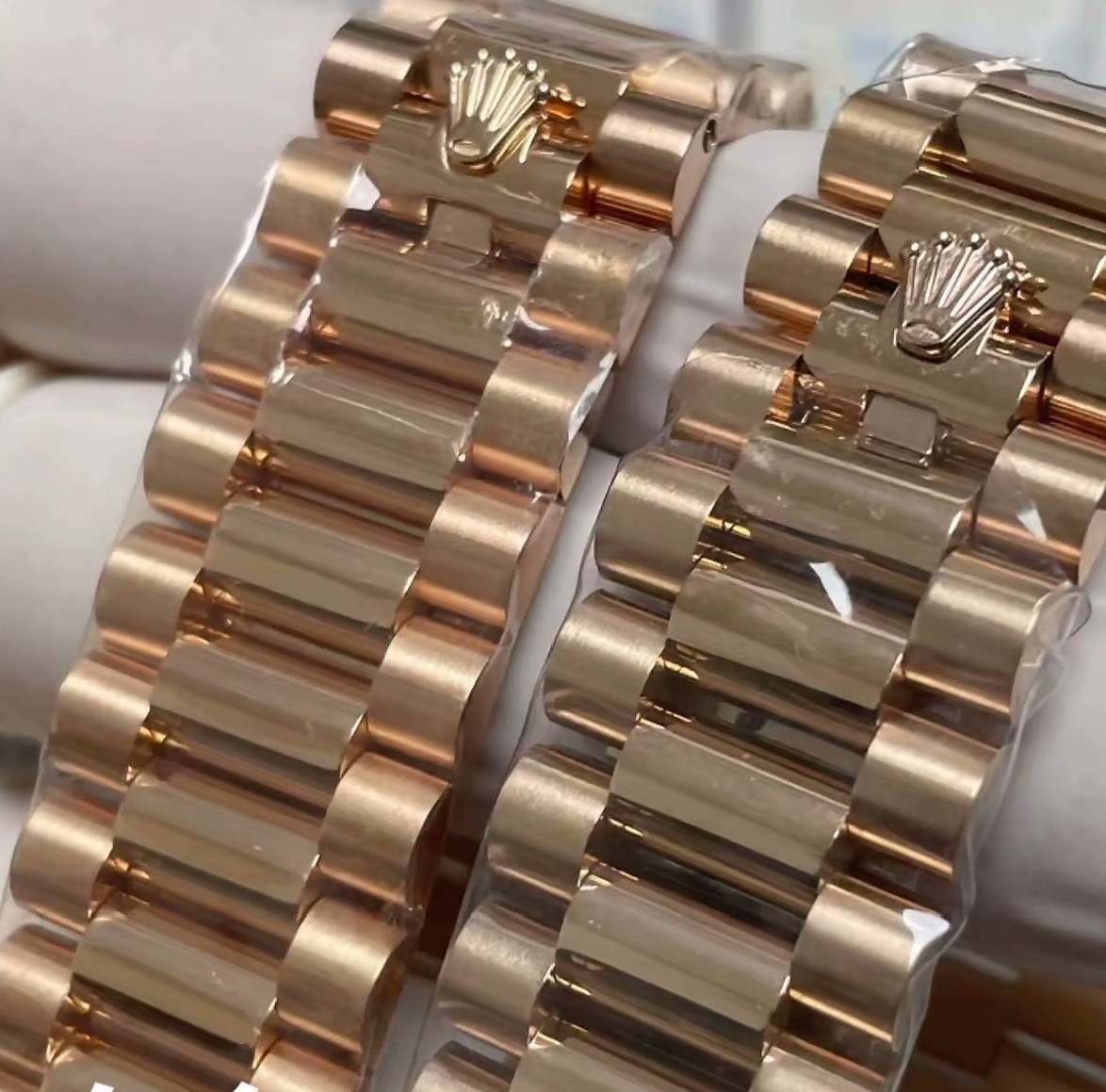
- The primary reason many friends choose gold plating is the color, with the most famous being Rolex’s Everose Gold. In order to achieve this color, our method involves purchasing genuine links and delivering them to the gold plating factory, where repeated comparisons and color adjustments are made to perfectly replicate it.
TIPS
A basic fact we can verify with any goldsmith is that 18k gold will oxidize and change color over time, becoming darker. Therefore, gen gold watch from different years will have varying colors. The gen link we used has been worn for about 1-3 years.
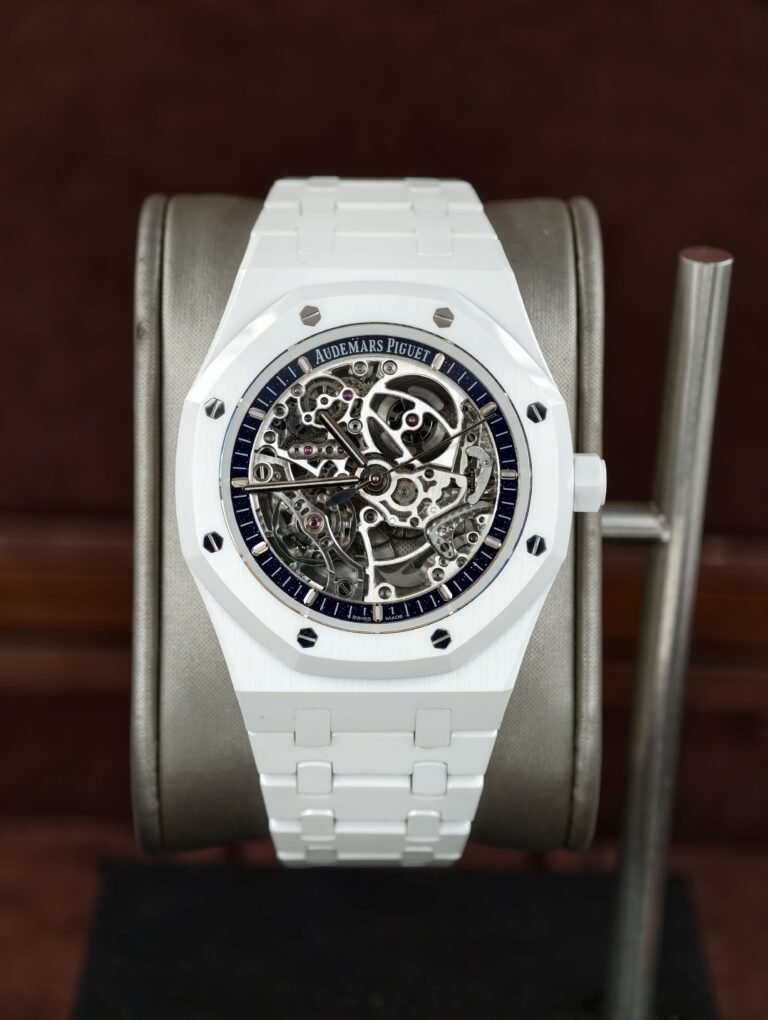
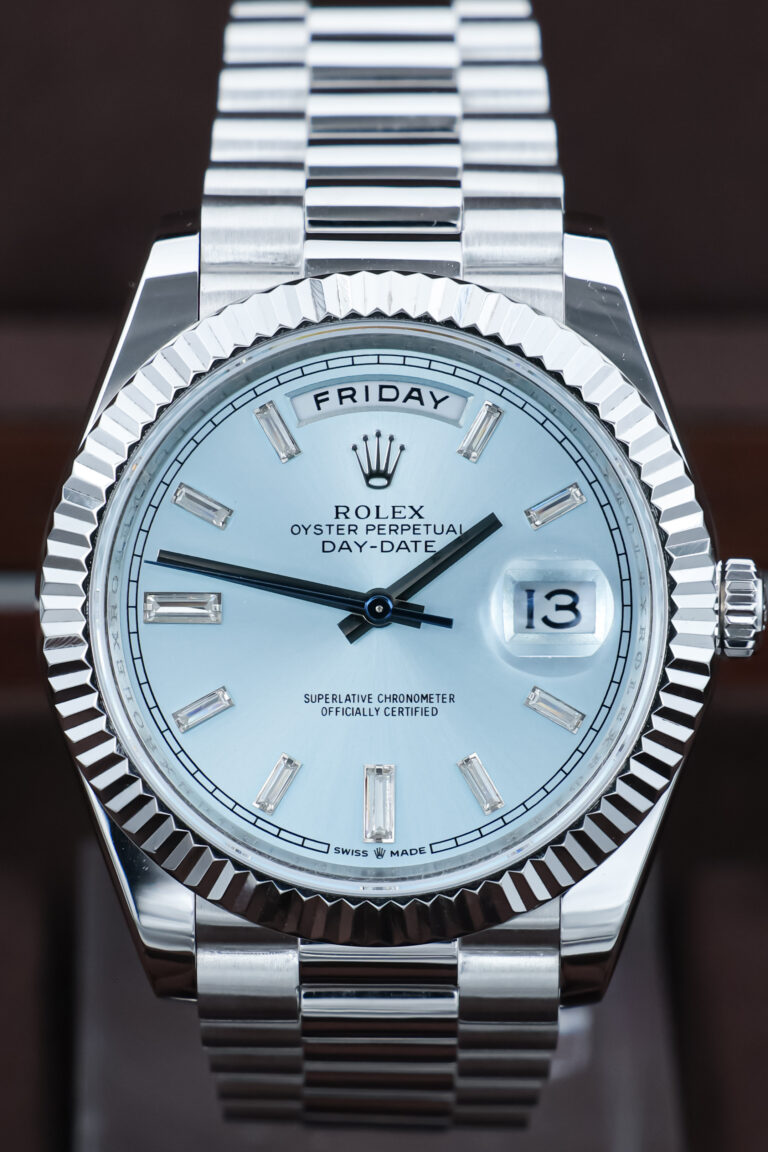
Does white gold require gold plating?
- Real white gold or platinum is a metal with a bluish hue, while stainless steel has a grayish hue. They are definitely not the same color. However, many people are not sensitive to the difference in their colors. You can place your order based on your personal preferences. Our gold plating process uses a double-layer metal plating method: first, a layer of white gold is applied, followed by a layer of rhodium. This makes it brighter, more corrosion-resistant, and also addresses the issue of stainless steel allergies for many people.
The thickness of the gold plating
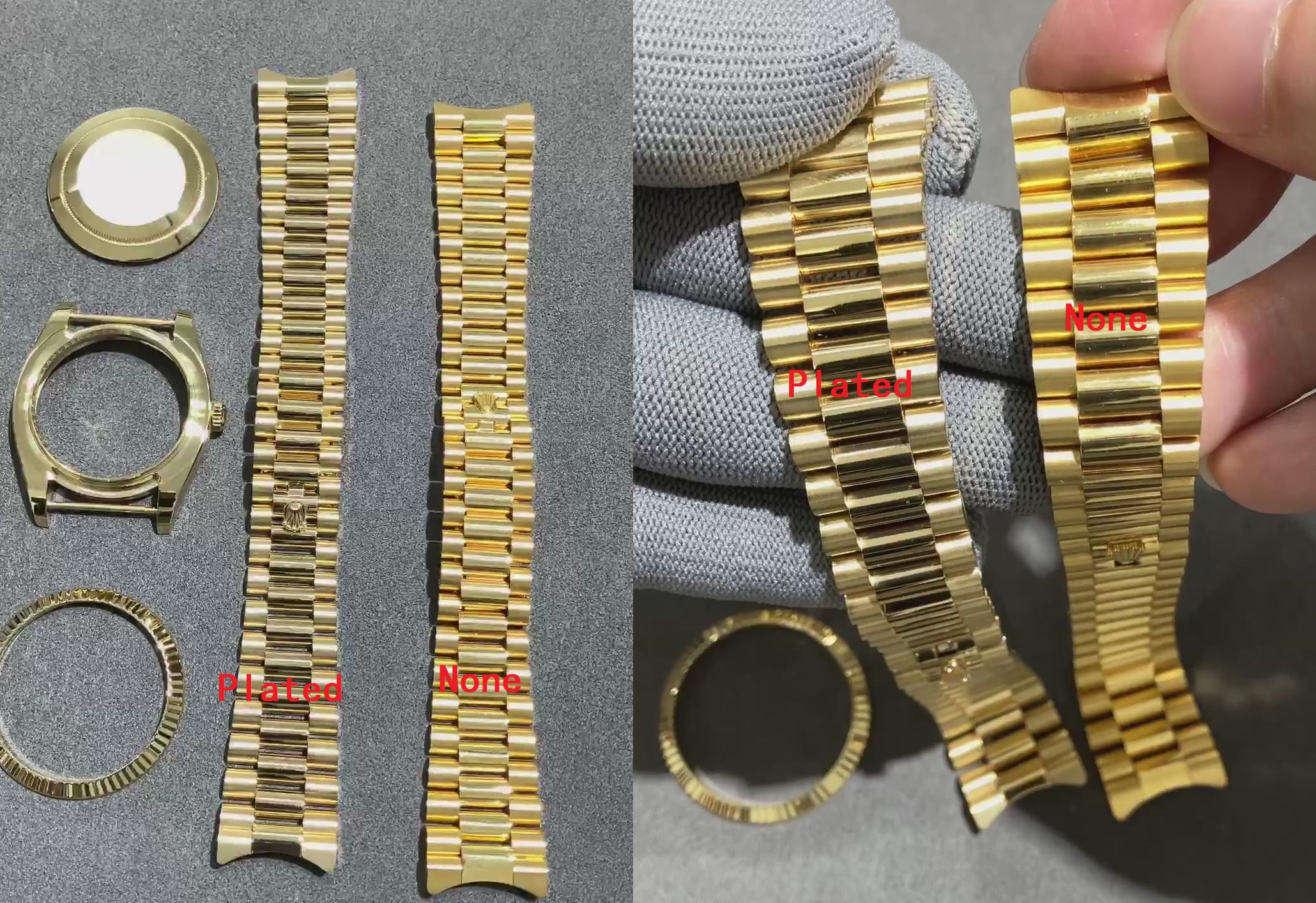
- Many factories do not use real gold in their plating process, opting instead for gold-colored paint, which often lacks a metallic luster. Among the few factories that do use real gold plating, the thickness is typically only 1-2 micrometers. In contrast, our gold plating employs a thickness of 5-8 micrometers, with gold material consumption amounting to 2-3 grams per watch.
Why is the thickness of the gold plating uneven?
- Because different parts of the watch have varying details, such as the St. Bernard dog head hallmark, excessively thick plating would obscure its intricacies. For instance, on the Day-Date bezel, overly thick plating would make it appear less sharp. Therefore, through repeated experimentation and adjustments, we have determined that maintaining a minimum thickness of 5 micrometers is the optimal choice. On larger surfaces, to enhance the watch’s durability, the thickness is increased to 8 micrometers.
- Experimental tests have shown that a thickness exceeding 8 micrometers would cause deformation in most positions. Therefore, we have determined that the optimal thickness range is 5-8 micrometers.
How long will it last?
3-5 Years Durability (with proper care)
TIPS
Gold is a relatively soft metal and is not highly wear-resistant. Its durability depends on our wearing habits. Harsh wearing environments (high acidity, high alkalinity, high salinity) and rough handling can accelerate its wear. However, the likelihood of the base metal being exposed is quite low. Please take good care of your watch. If you have particularly high requirements for durability, the only option currently available is watches made from solid gold.
How is your craftsmanship?
The first picture is an actual photo of our factory, which is a large-scale specialized facility. Unlike many small workshops that use chemical solutions for plating—resulting in surfaces that are highly prone to peeling—professional production must be supported by large-scale industrial equipment.
- Our work is strictly carried out according to standard procedures, and electroplating must be used to enhance its adhesion.